Map a single square metre
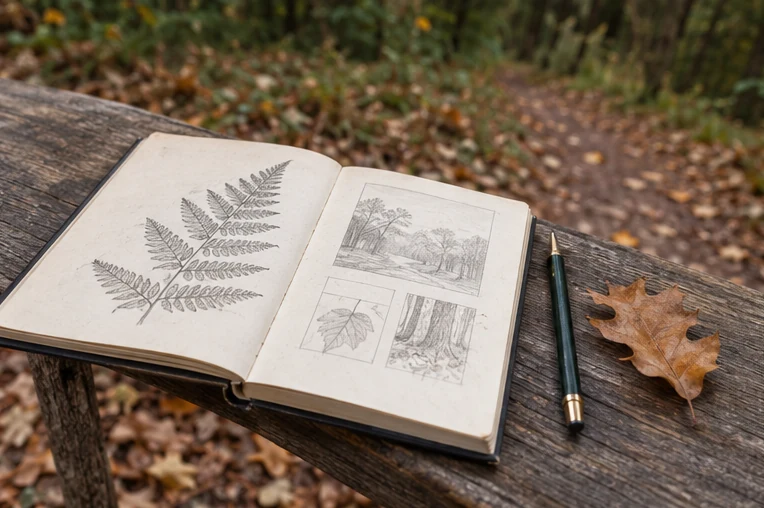
Sketch a patch of ground and label moss, leaf litter, exposed roots or fungi from observation. A tiny area often contains more differences than a panoramic page.
Make a texture vocabulary
Use pencil rubbing only where permitted and safe, or draw patterns of bark, stone and leaf veins. Write what each texture felt like instead of relying on a pretty photo alone.
Keep colour in context
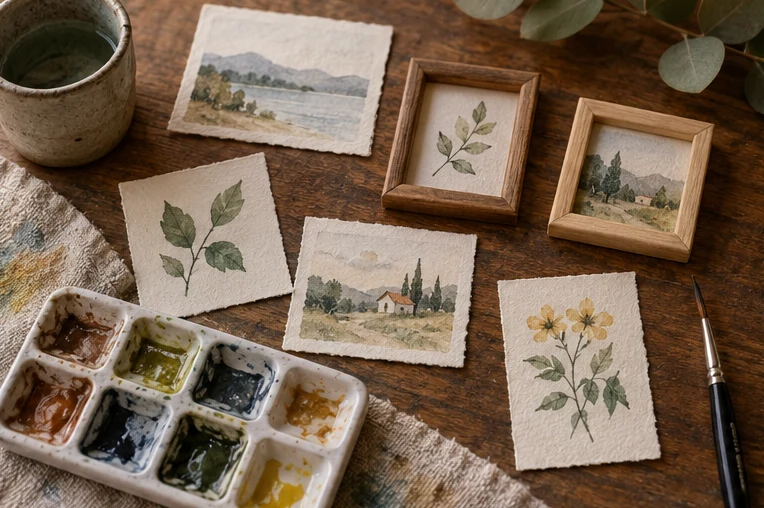
Make three swatches from the light actually present: canopy green, leaf brown and sky through branches. Record the weather, because a woodland palette can change dramatically in rain.
Track a repeat visit
Return to the same path and compare what has appeared or disappeared. Leave living plants in place, respect protected habitats and use a photograph rather than collecting specimens when appropriate.
Observation prompts for your own field notes. Leave unknown species unidentified rather than guessing.