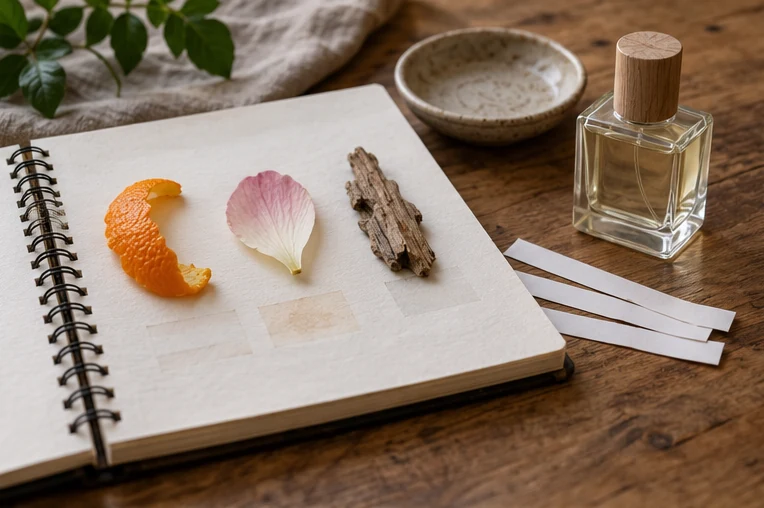
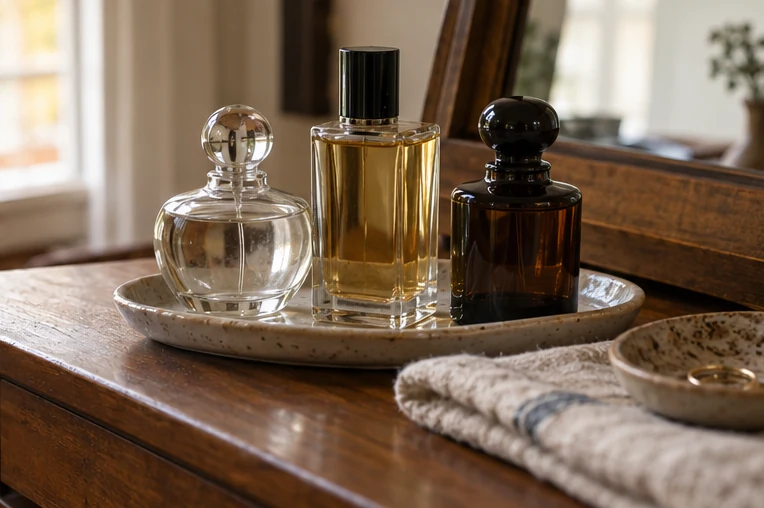
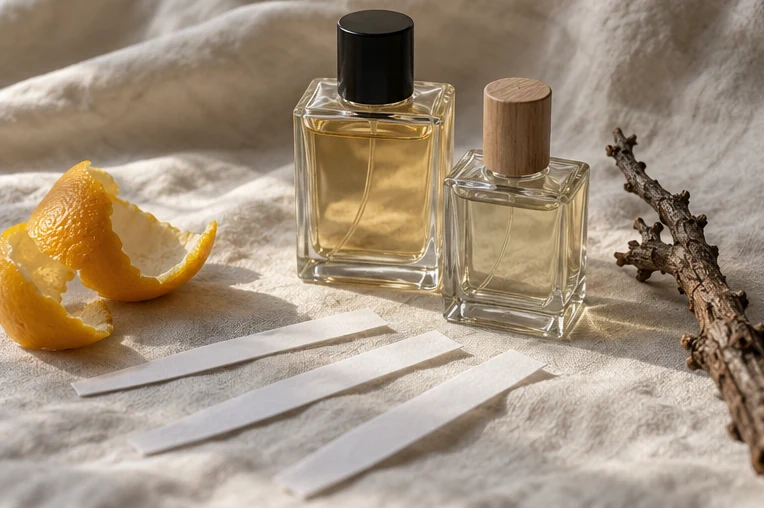
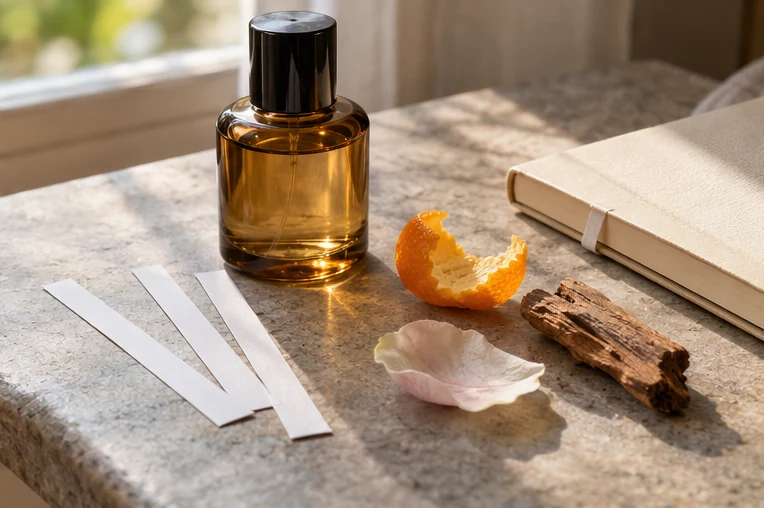
A perfume note list is not the same thing as the scent you experience. Build your own reference map by smelling a few familiar materials and recording how your perception changes over time.
Write what you notice immediately, then after a short interval and later in the day if comfortable. Do not force every experience into a manufacturer's top-middle-base pyramid.
02
Create families in your language
You might use bright citrus, clean linen, leafy green, warm spice or creamy wood as descriptors. Choose words that help you recognise choices, not just impressive terminology.
Write an impression before looking for a note.A personal observation map. These stages are prompts, not fixed evaporation times or proof of ingredients.Swipe the diagram to compare the details. With a keyboard, focus it and use the arrow keys.03
Compare on paper and skin carefully
A blotter can reveal one impression while skin can change the balance. Follow fragrance use instructions and avoid applying unknown materials directly to skin.
04
Connect notes to occasions
Note where a fragrance feels comfortable: busy daytime, quiet evening or outdoor walk. Track strength and other people's sensitivities as well as your personal preference.
A personal scent reference and three-stage observation card; note impressions in your own words.
AT YOUR WORKTABLE
Keep the impression in your own words.
Choose a direction and keep the details that matter to you.
Your notes are not saved after a reload. Download or print a copy to keep them.
A scent, over time
Write your impressions in your own words. Observation times are prompts, not a promise about a fragrance's behavior.