Mini Room Craft Ideas with Big Personality
Mini room craft inspiration with practical, visual ideas you can adapt. Explore miniature room diy and cardboard mini room in this focused guide, then save the direction you want to try next.
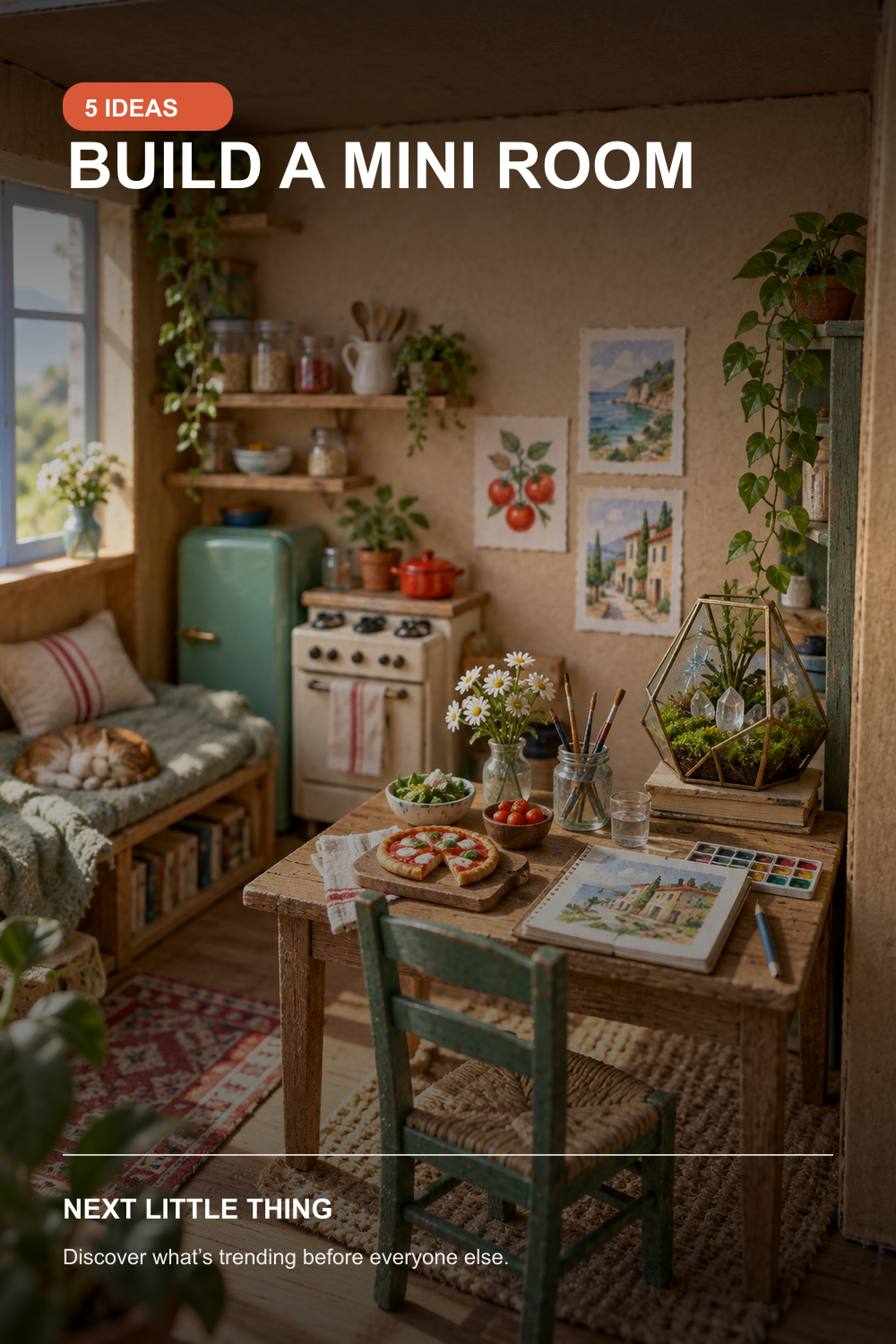
Trend signal: Pinterest Hobbies 2026: +296% global YoY.
5 directions to explore
- Artist studio corner
With “Artist studio corner,” the edit matters: keep the feature that explains the idea and remove details that weaken it. Keep the palette narrow and vary surface texture instead; this helps a small scene feel detailed without becoming visually noisy. Keep a note of the palette, proportions and materials so the result can be repeated or adapted without guessing.
- Tiny home café
Make “Tiny home café” feel intentional by repeating one shape, note, material or color already present in the wider concept. Decide the miniature's scale before cutting anything; a repeated reference object such as a chair, doorway or cup keeps every element believable. Keep the finish honest to the materials; visible texture is useful when it supports the idea rather than hiding poor joins.
- Dark cottage kitchen
Make “Dark cottage kitchen” feel intentional by repeating one shape, note, material or color already present in the wider concept. Dry-fit the scene and check the camera angle before gluing, because depth, shadows and sight lines matter more than tiny decoration. Keep the finish honest to the materials; visible texture is useful when it supports the idea rather than hiding poor joins.
- Retro bedroom nook
The strongest version of “Retro bedroom nook” starts with a clear purpose: where it will be used, viewed or remembered. Decide the miniature's scale before cutting anything; a repeated reference object such as a chair, doorway or cup keeps every element believable. Compare a restrained version with a bolder one, then keep the option that explains cardboard mini room most clearly at a glance.
- Plant-filled reading room
Build “Plant-filled reading room” around the real object, page, room or routine it needs to fit—not around the photograph alone. Dry-fit the scene and check the camera angle before gluing, because depth, shadows and sight lines matter more than tiny decoration. Keep a note of the palette, proportions and materials so the result can be repeated or adapted without guessing.
How to use this edit
These five directions are an editorial starting point for mini room craft, not a requirement to use every idea at once. Pick the option that best matches your setting, materials and skill level, then make one controlled change at a time so you can see what genuinely improves the result.
Adapt materials and methods to your tools and skill level. Test finishes and adhesives on a small area first.