Mini Watercolor Painting Ideas for Small Spaces
Mini watercolor painting inspiration with practical, visual ideas you can adapt. Explore miniature art and watercolor ideas in this focused guide, then save the direction you want to try next.
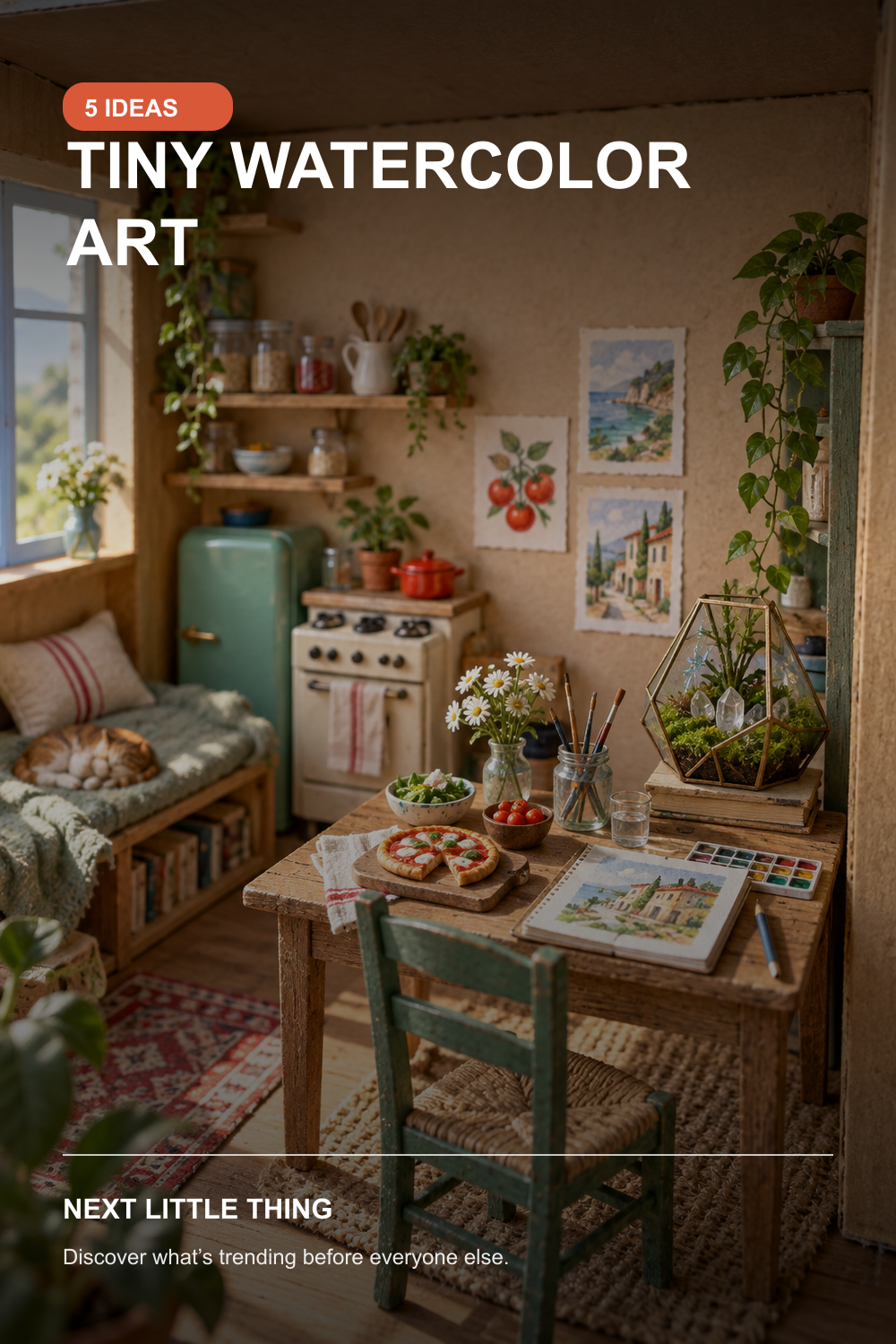
Trend signal: Pinterest Hobbies 2026: +238% global YoY.
5 directions to explore
- Postage-stamp landscape
For “Postage-stamp landscape,” decide what should be noticed first and let the rest of the mini watercolor painting composition support it. Dry-fit the scene and check the camera angle before gluing, because depth, shadows and sight lines matter more than tiny decoration. Stop once the hierarchy is clear; extra detail should earn its place by improving use, meaning or the painting ideas promise.
- One-color botanical
Use “One-color botanical” to give this painting ideas concept a distinct visual role rather than adding decoration for its own sake. Place the strongest detail near the front third of the scene and leave enough open space for the eye to understand the room. Check the result in natural light and at normal viewing distance, not only in a close-up arranged for the camera.
- Tiny window view
Before developing “Tiny window view,” compare its scale and contrast with the other elements already in the project. Dry-fit the scene and check the camera angle before gluing, because depth, shadows and sight lines matter more than tiny decoration. A quick photo test will reveal whether the contrast, spacing and focal point still communicate miniature art on mobile.
- Mini food portrait
Treat “Mini food portrait” as the main idea, not a small afterthought in a mini watercolor painting project. Keep the palette narrow and vary surface texture instead; this helps a small scene feel detailed without becoming visually noisy. The final version should look complete without depending on a filter, watermark or a caption to explain what it is.
- Four-season set
Make “Four-season set” feel intentional by repeating one shape, note, material or color already present in the wider concept. Keep the palette narrow and vary surface texture instead; this helps a small scene feel detailed without becoming visually noisy. Check the result in natural light and at normal viewing distance, not only in a close-up arranged for the camera.
How to use this edit
These five directions are an editorial starting point for mini watercolor painting, not a requirement to use every idea at once. Pick the option that best matches your setting, materials and skill level, then make one controlled change at a time so you can see what genuinely improves the result.
Adapt materials and methods to your tools and skill level. Test finishes and adhesives on a small area first.