Miniatures from Trash: 5 Smart Material Swaps
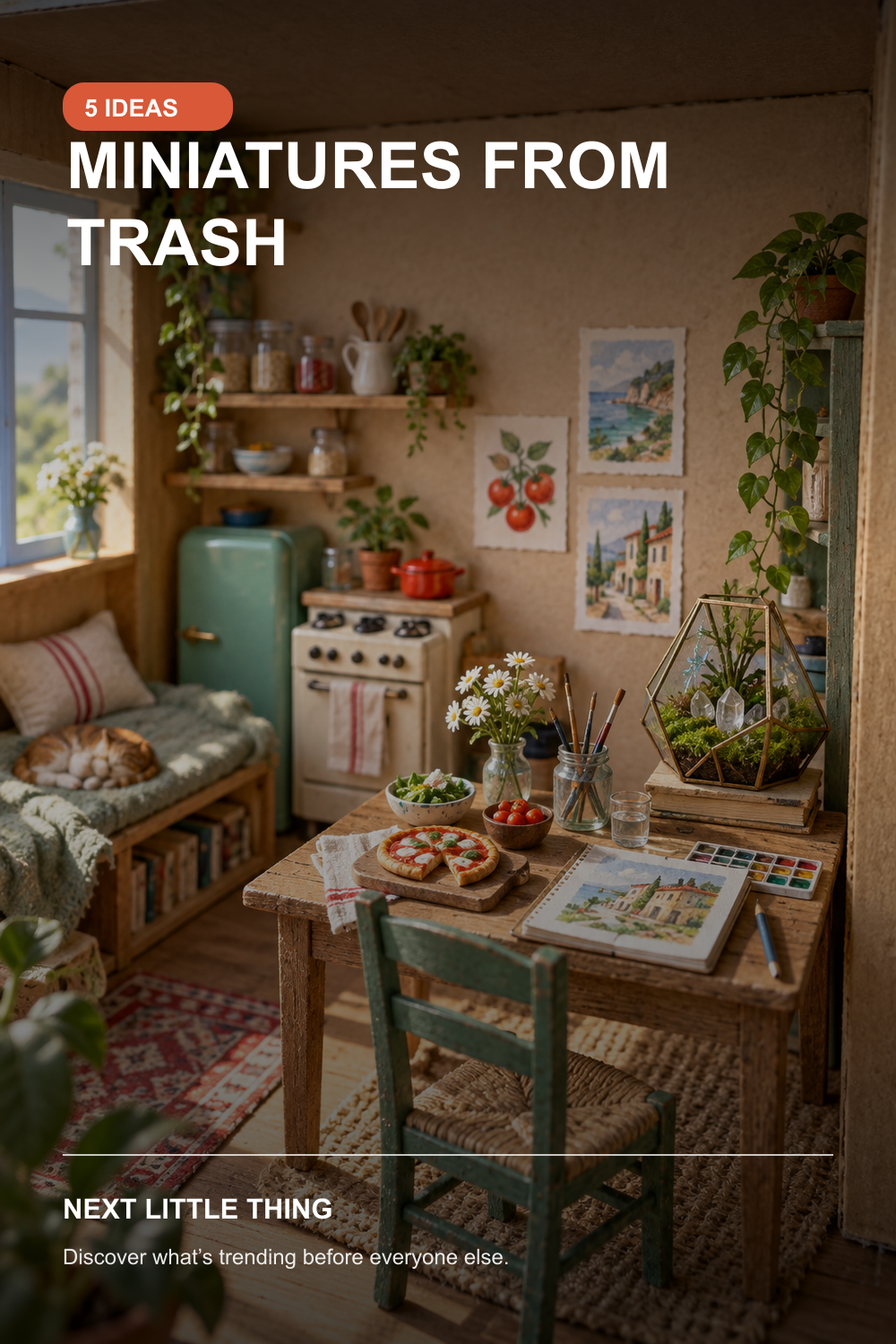
Miniatures from trash inspiration with practical, visual ideas you can adapt. Explore recycled miniature crafts and tiny room diy in this focused guide, then save the direction you want to try next.
Trend signal: Pinterest Hobbies 2026: +437% global YoY.
5 directions to explore
- Bottle-cap side table
Before developing “Bottle-cap side table,” compare its scale and contrast with the other elements already in the project. Place the strongest detail near the front third of the scene and leave enough open space for the eye to understand the room. Review accessibility as well as style: important text and shapes need enough size and contrast to remain readable.
- Cardboard room shell
The strongest version of “Cardboard room shell” starts with a clear purpose: where it will be used, viewed or remembered. Keep the palette narrow and vary surface texture instead; this helps a small scene feel detailed without becoming visually noisy. If two elements compete, reduce the weaker one rather than adding another accent to force attention back to the subject.
- Foil-tube lamp shade
Treat “Foil-tube lamp shade” as the main idea, not a small afterthought in a miniatures from trash project. Use the cleanest side of recycled material for visible surfaces and hide rough joins where a real room would naturally have trim or a shadow line. A quick photo test will reveal whether the contrast, spacing and focal point still communicate recycled miniature crafts on mobile.
- Fabric-scrap rug
With “Fabric-scrap rug,” the edit matters: keep the feature that explains the idea and remove details that weaken it. Dry-fit the scene and check the camera angle before gluing, because depth, shadows and sight lines matter more than tiny decoration. The final version should look complete without depending on a filter, watermark or a caption to explain what it is.
- Clear packaging window
Before developing “Clear packaging window,” compare its scale and contrast with the other elements already in the project. Keep the palette narrow and vary surface texture instead; this helps a small scene feel detailed without becoming visually noisy. Review accessibility as well as style: important text and shapes need enough size and contrast to remain readable.
How to use this edit
These five directions are an editorial starting point for miniatures from trash, not a requirement to use every idea at once. Pick the option that best matches your setting, materials and skill level, then make one controlled change at a time so you can see what genuinely improves the result.
Adapt materials and methods to your tools and skill level. Test finishes and adhesives on a small area first.