Give the counter a hero item
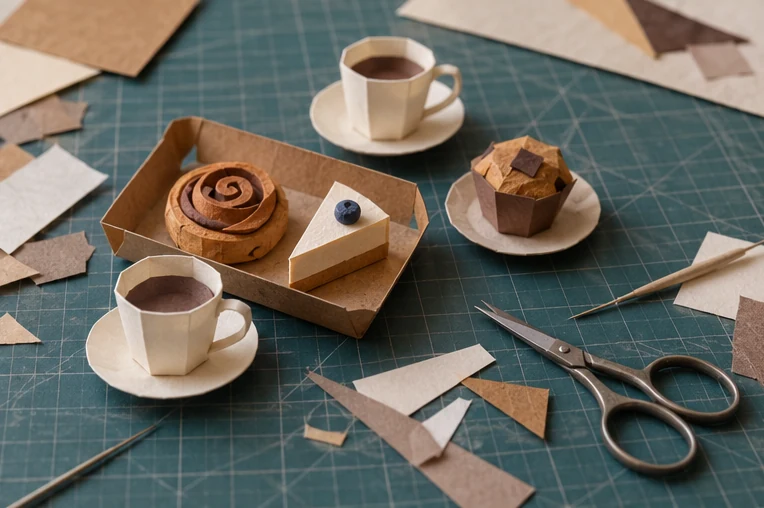
A pastry dome, cake slice or croissant tray should be readable from the viewing distance. Tiny objects need a stronger silhouette and fewer surface details than full-size food.
Plan packaging with folds
A miniature paper bag or cake box needs visible side panels and a clear opening. Mock it up in plain paper first; no downloadable die-line is provided by this article.
Design one legible menu
Use a handful of item names rather than a realistic but unreadable paragraph. Consider a larger wall menu and a tiny counter card, each serving a different visual purpose.
Build depth in the window
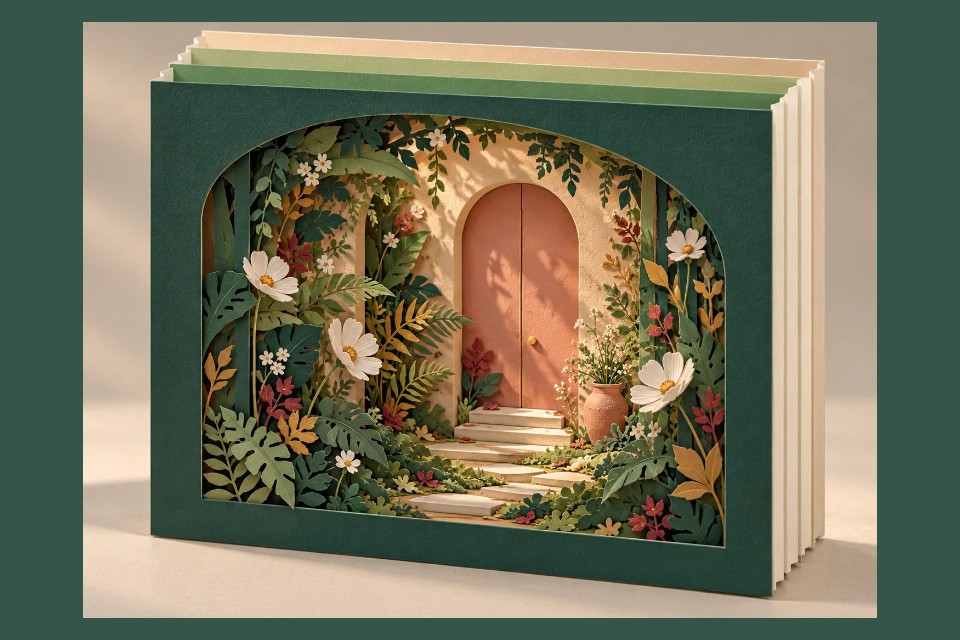
Put one tray near the glass, a café machine or shelf behind it and a warm background layer at the rear. The paper objects can remain illustration concepts until a real assembly is tested.
Make a takeaway moment
Fold a plain paper sleeve around a mock cup or a tiny bakery bag beside the counter. A short shop name and one broad stripe read better than a wall of miniature text. Make a scrap-paper prototype at your chosen scale first; no cut template is supplied here.
Five café-detail concepts and a scale calculator; no print-and-cut food templates are included.