Repeat one scale
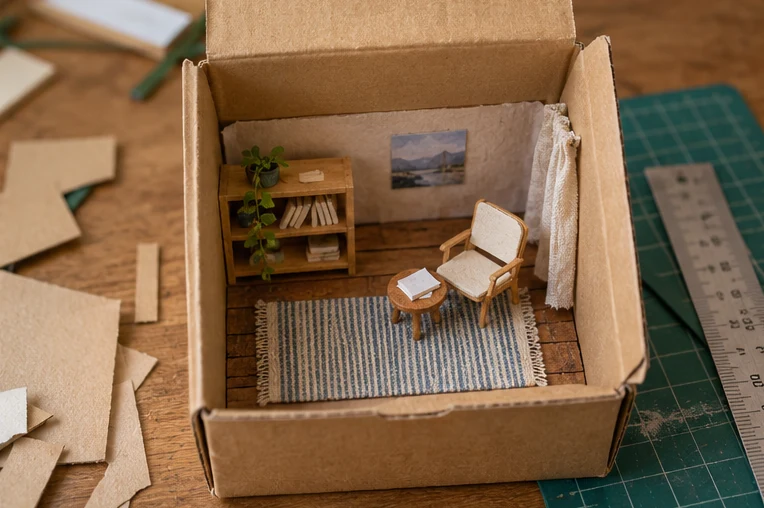
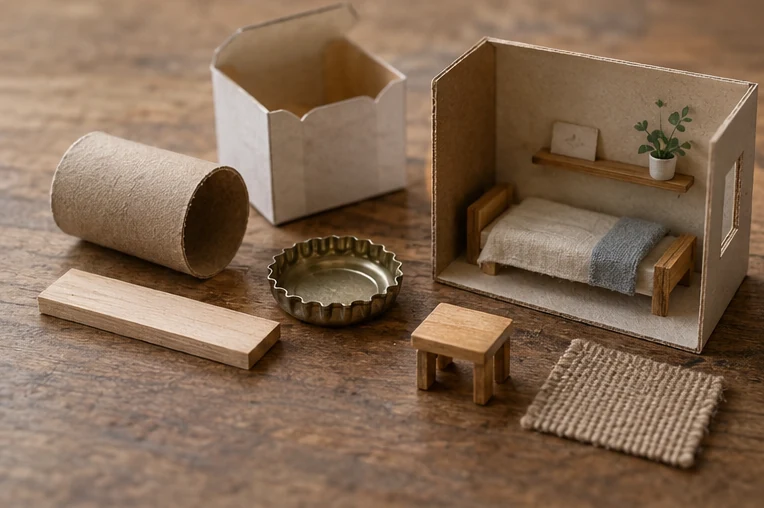
A miniature door, chair and lamp should belong to the same imagined world. Make a paper person silhouette or scale ruler and stand it beside the largest pieces before detailing them.
Show evidence of routine
A half-open notebook, folded blanket or cup on a side table suggests activity more effectively than a dozen decorative objects. Place props where a person would actually reach for them.
Give surfaces different ages
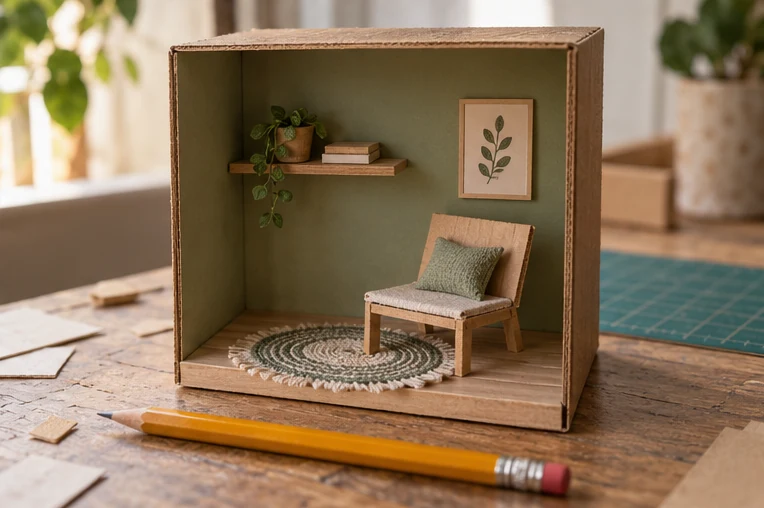
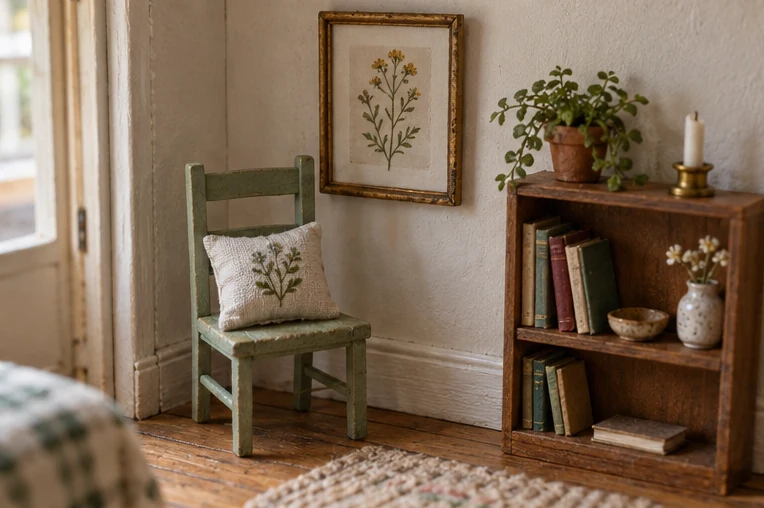
Mix one smooth painted wall with worn wood-look furniture or an imperfect tile edge. Too many textures of equal strength make the room feel like a sample board.
Make the light believable
Decide where daylight or a fictional lamp would come from. Orient shadows and highlights consistently; any real LEDs or wiring would need separate electrical and heat testing.
Scene-building notes and a scale calculator. Measure your own room and materials before cutting.