Pick a scale and a footprint
Use one familiar object, such as a miniature doorway, to check the room height. Sketch the base, walls and largest furniture shapes in pencil, then test them in the cardboard shell before glue.
Strengthen just the right places
Double the floor where heavy furniture will sit and reinforce corners with folded strips. Keep window openings away from weak joints, and dry-fit everything to avoid warped panels.
Make textures from waste
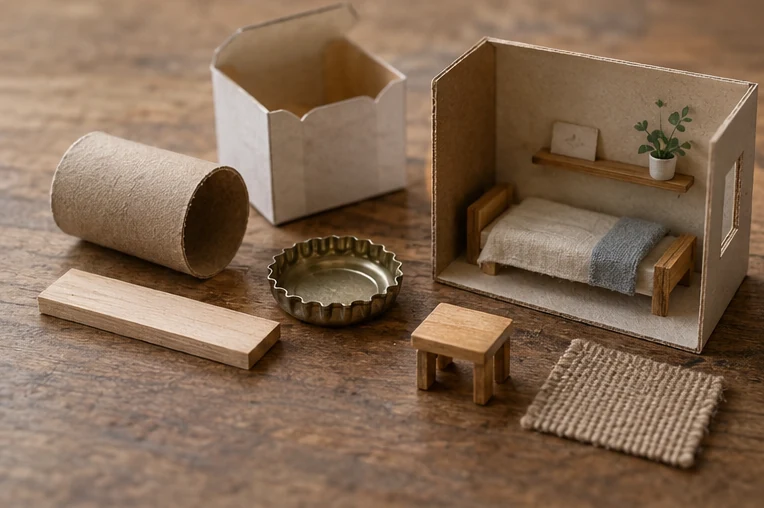
Thin corrugated card can suggest wood planks, paper packaging can become wallpaper and a small transparent offcut can stand in for a window. Use the direction of every texture consistently to protect the illusion of scale.
Plan a removable roof or wall
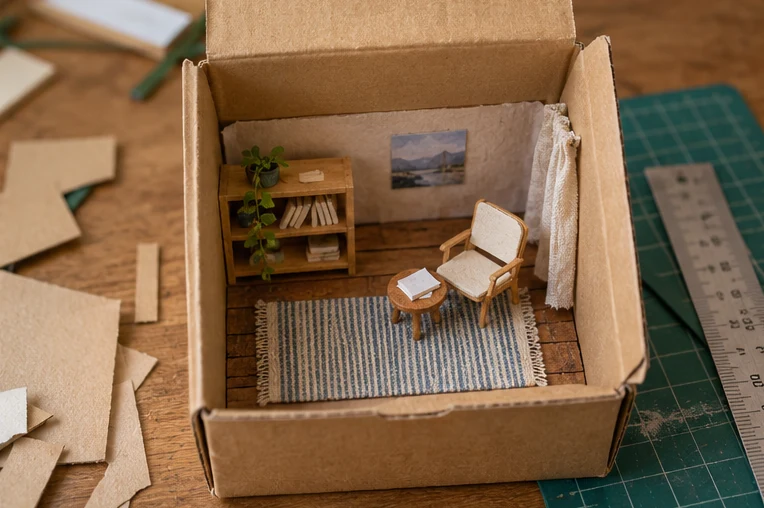
A miniature is easier to photograph and maintain if one wall can lift away. Check the opening with a paper mockup first, so you can rearrange furniture, reach joints and photograph the scene later.
Make the furniture removable
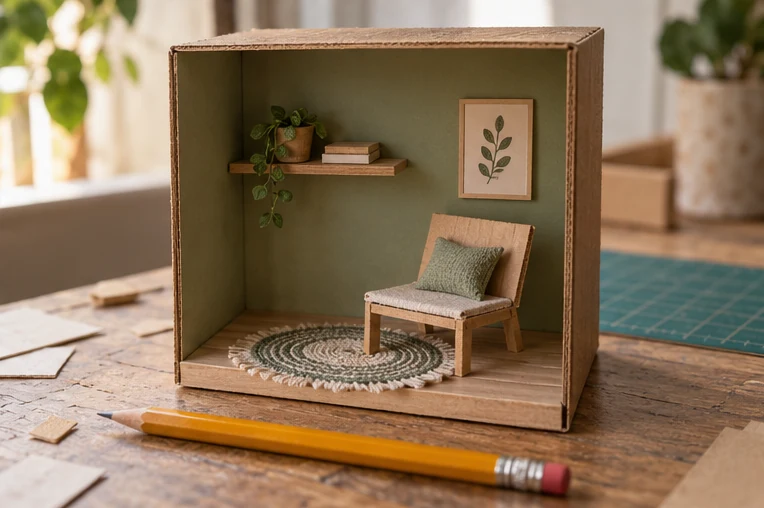
Attach a tiny shelf to a separate backing card before placing it in the room. Keep the chair, rug and small table loose for the first layout test. You can change the scene without tearing a finished wall, and you can reach a weak joint for repair.
Five planning choices and a scale calculator. The separate Reading Nook project provides measured cut files.